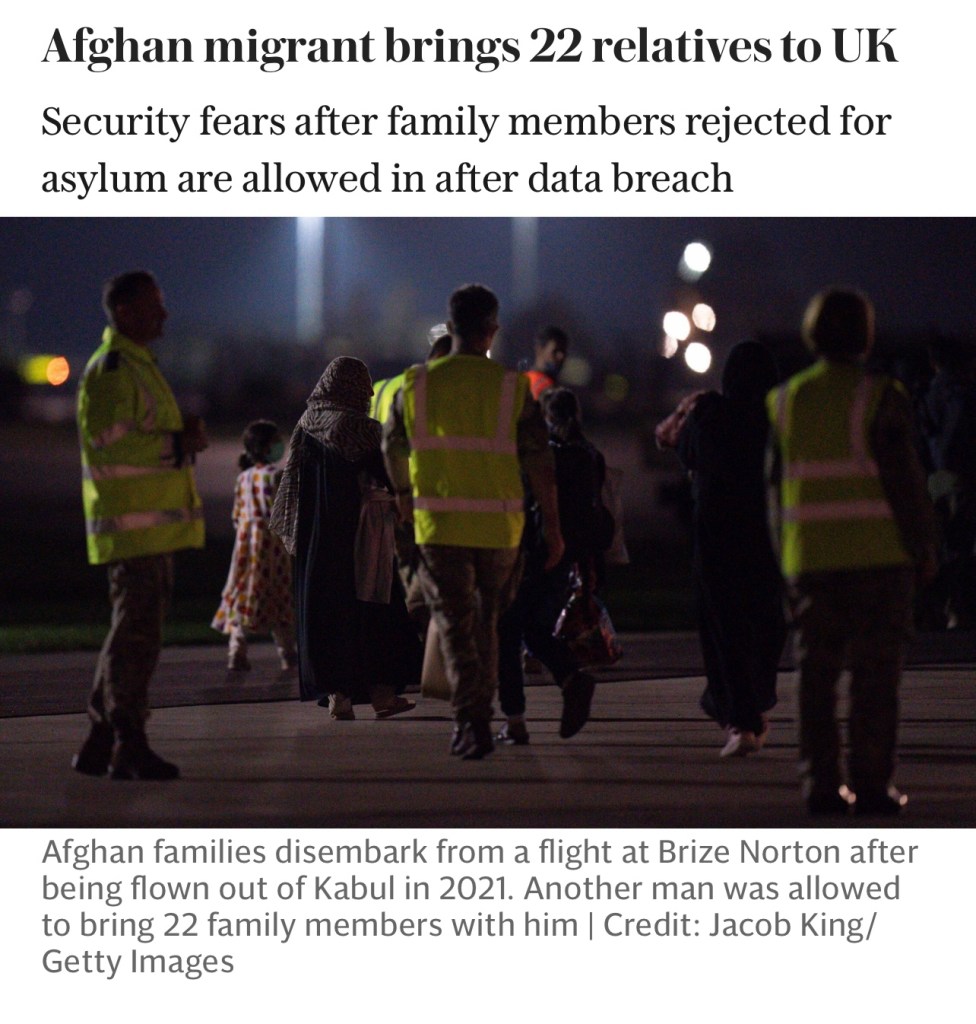
While Afghan refugees settle freely with military help, Commonwealth soldiers fight a silent battle for their children’s futures.
In July 2025, headlines declared that an Afghan migrant had successfully brought 22 relatives into Britain, despite several of them having been previously rejected for asylum. This was made possible through what officials termed a “data breach” a polite phrase masking a wider truth: if the system wants you in, it will find a way.
But for the hundreds of Commonwealth soldiers quietly serving in the British Army, the system doesn’t want to find a way. It wants to put up barriers.
While politicians trip over themselves to show compassion to foreign arrivals, the men and women serving this nation in uniform, particularly those from Africa, the Caribbean, and Fiji are treated with cold suspicion when trying to reunite with their families.
These are not people asking for housing, benefits, or a free ride. They are not asylum seekers. They are British taxpayers and uniformed service personnel who stand guard at the nation’s gates. And yet, they are forced to fight exhausting bureaucratic battles simply to bring their children and spouses to live with them families who, without doubt, would only strengthen Britain, not burden it.
Before the MOD’s Welfare Department even considers supporting a soldier’s child living overseas, that soldier must provide:
– Proof of income meeting arbitrary thresholds.
– Bank statements stretching back months or years.
– Western Union or MoneyGram transfer receipts as evidence of regular financial support.
– Detailed explanations of why their family does not already hold the “correct” visa.
All this from people the British Government trusted enough to send on operations in Iraq, Afghanistan, and now Eastern Europe.
Consider the cruel irony: These same soldiers denied the basic right to bring their own families to the UK, are repeatedly called upon to support government operations designed to help others start a new life here.
Under Op Interflex, they train Ukrainian forces in how to defend and rebuild their nation, while quietly battling the Home Office for the right to bring their own children to safety.
Under Op Pitting, they risked their lives in Kabul to evacuate Afghan families to the UK, only to return home and find their own families treated as foreigners by the very country they serve.
Under Op Shader, they have stood firm in the fight against ISIS, helping protect civilians across Iraq and Syria, even while their own applications to reunite with loved ones are met with suspicion and delay.
Now, under Op Lasarite, they provide round-the-clock support to help Afghan migrants settle into British communities, teaching them how to navigate British life, access healthcare, and find belonging. Yet these soldiers, living side-by-side with those they help, remain locked in battles of their own, fighting bureaucracy, not for strangers, but for their own children.
All these efforts serve the same moral purpose: helping others rebuild lives torn apart by war. And yet, these soldiers must watch as those they serve receive rights and recognition denied to them.
This is not hypothetical injustice. It is lived reality. I have met serving soldiers, particularly single mothers from the Caribbean, who quietly work multiple jobs alongside their military duties to support children they haven’t seen in years. Not because they don’t care, but because the UK Government has placed so many legal and financial hurdles in their way.
These mothers aren’t skipping regimental parties because they’re “antisocial.” They’re doing side shifts to make the extra money to send home, battling the Home Office, and counting down days between hopeless meetings with welfare officers who tell them, “Our hands are tied. I’ll give you this card (AFF) or just go on Google.”
The British Armed Forces Covenant is supposed to ensure no one who serves this nation is disadvantaged because of their service. Yet in practice, the Covenant isn’t worth the paper it’s written on. It is a poster in a welfare office. It is a slogan on a website. It is not a lived reality for those battling for their families.
Unit welfare departments are, frankly, useless in these matters. Unlike the Army Families Federation (AFF.) A charity that gives tremendous support to soldiers and their families, these official welfare channels shrug and hide behind policy. The person is normally just filling a gap or a position for a tick-in-the-box period with a tired “back in my day” mentality. It doesn’t affect them, so it doesn’t matter. More time is spent organising coffee mornings, wives’ social gatherings, and giving out day passes than addressing real issues that tear families apart.
Even the AFF themselves are frustrated with the Government’s double standards, knowing full well how much needless suffering these immigration policies inflict on loyal serving soldiers.
I also believe that by the Government’s own description of the word, these actions are prejudiced.
Where is the integrity in a system that demands soldiers show loyalty, respect, and selfless commitment, but cannot return the basic decency of supporting their family life? Where is the fairness in a government that publicly celebrates its “openness” to refugees while privately closing its doors on those wearing British uniform? Is it that they are only good for their sweat, blood, and tears, and nothing else?
The Policies at Fault:
The Appendix Armed Forces of the Immigration Rules places disproportionate financial and bureaucratic burdens on non-UK soldiers, even those with permanent contracts.
Meanwhile, the MOD’s Joint Service Publication (JSP) 770, which governs service family welfare, explicitly requires full immigration compliance before offering practical or financial help — even if it means separating parents from children for years on end.
There is no fast-track for Commonwealth soldiers. No sympathetic hearings. Just endless paperwork, endless excuses.
Enough is enough.
Britain’s armed forces recruitment adverts preach “belonging.” Its senior officers parrot empty slogans about inclusion and diversity. But belonging without your children is no belonging at all.
If this Government can move heaven and earth to accommodate strangers, it can move policy to protect those who already serve under its flag.
Service should mean something. Not just medals and memories but, the right to live as a family in the country you defend.
It is time for ministers, generals, and civil servants to show the integrity they so often demand of their troops. The double standard must end.
 Vincentian Expression
Leave a comment